
The Long Christmas Dinner Theater Review
Bread and Wine Theatre Company
St. Charles, Missouri
12/06/2025
By Michael A. Harding
Originally Published by The Thornton Wilder Society
Republished here with the permission of The Thornton Wilder Society
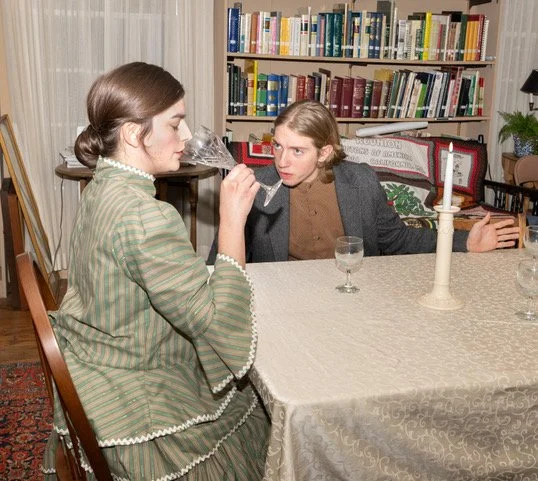
Bread & Wine Theatre Company’s production of Thornton Wilder’s The Long Christmas Dinner is clearly a labor of love. It is performed in the quaint setting of a literal family dining room in the historic Thomas Sappington House in Crestwood, Missouri (just outside of St. Louis). Seating only up to 40 audience members around the edges of the room and action, Director Owen Brown–founder of Bread & Wine–creates an evening of intimacy and inclusion from the moment audience members take their seats.
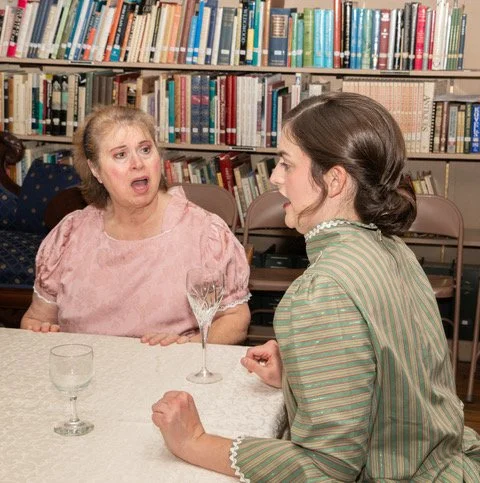
The evening begins with a personal welcome from Brown as well as a short explanation of his personal relationship to the play. Before the first line is spoken, the audience feels personally invited to share an important, heartfelt experience. And Bread & Wine succeeds.
The Long Christmas Dinner is a one-act play that spans 90 years of the Bayard family’s history (1841-1931), shown entirely through a sequence of Christmas dinners. Each of the actors plays multiple roles throughout the generations. This lends a wonderful nuance to the story of a family living through the years. Through this, Brown creates a subtle yet noticeable theme–the likenesses and traits shared by ancestors and progeny, sometimes skipping a generation but being present, nonetheless. Though relatively brief as are many of the characters’ time onstage, every time one heads through the portal of death (or simply heads toward it – a device used here and there to powerful effect) the audience feels a shared loss.
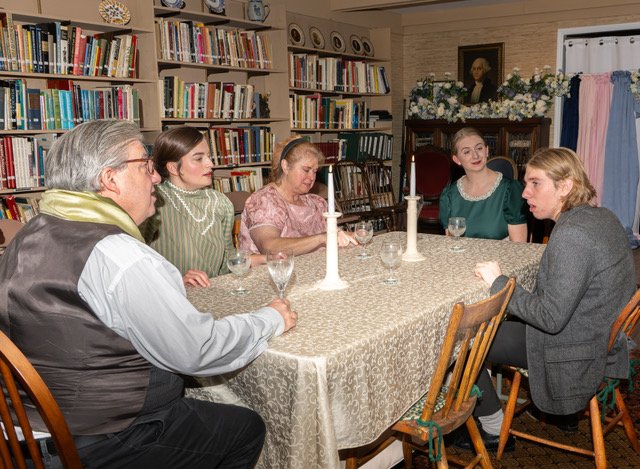
The humanity brought to the table (no pun intended) by all the actors is poignant and powerful throughout. Each character is one that we all know in our own families and circles. This deliberate device of Wilder’s increases the audience’s connection with the story being told. It is almost as if the action happening right before their eyes is a memory or experience of their own. Every fight, disagreement, tender moment, expression of love or wistful remembrance has been seen by everyone before. This is what makes this play so relatable and timeless. So long as we interact with family–indeed with anyone else–we will have a personal connection to this play. Brown does a remarkable job allowing this to happen, never overstating the obvious, merely letting the power of the play exist.

The cast is made up of actors who clearly understand their part of the story. It is not accurate to refer to each character’s–and actor’s–"moment to shine." Each actor has multiple memorable moments, but they occur with a sensitivity and acknowledgement that they are common throughout time and humanity. As occurs frequently in the works of Thornton Wilder, something extraordinary is revealed in the realm of the ordinary, where "normal" is revealed for what it is.
That, of course, is the fact that in an infinite line of possibilities in any given moment, the one that occurs–and to whom–is extraordinary because it happens at a particular moment and to a particular person, never to be repeated exactly. Along with this–as through the branches of a family tree–nothing of these occurrences could happen without the long line of extraordinary happenings leading up to it.
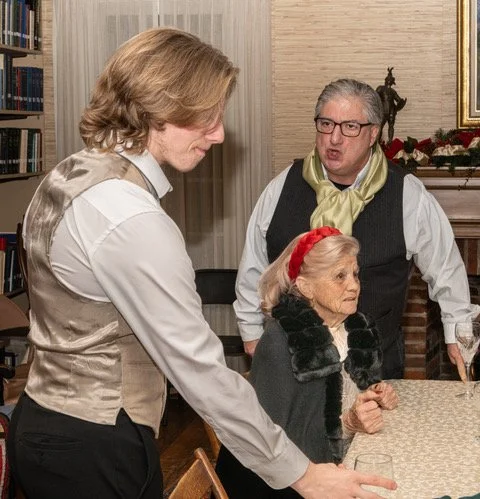
Many moments stand out: an intense exchange between Charles (Pietro D’Alessio) and his son, Roderick II (Nicholas Urbanowicz), poignant reminisces of Mother Bayard and Cousin Ermengarde (both played by Bo Hanley), lovely genuine adoration between Roderick I (Adam Usry) and Lucia I (Haley Clegg). Both Genevieve (Laura Kyro) and Leonara (Tara Laurel) hold the stage beautifully in quiet strength, both dealing with inner demons and doing their best to stay restrained yet heard.
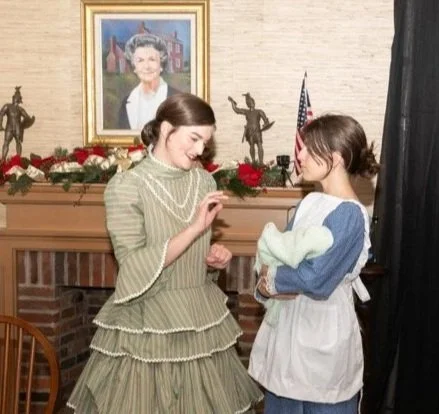
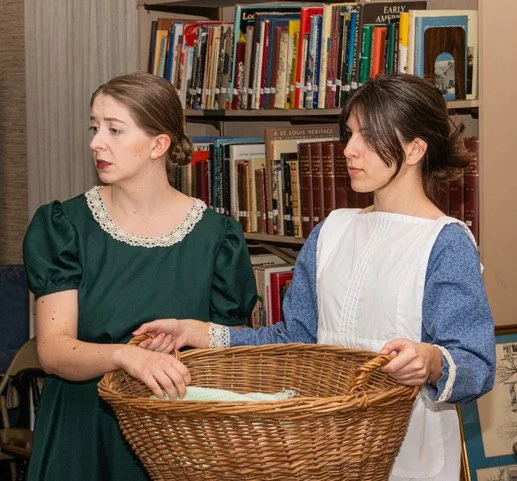
Tackling perhaps the most difficult of roles is Abby Robinson as the nurse, always entering with the birth of a new child. She creates a warm, predictable presence that ushers in the arrival of every new generation. She does not have a scripted line to express or even a character surname. Instead, she is a solid presence of dignity, of neutrality towards the ultimately unimportant squabbles between people and of the inevitability of both life and death. Indeed, one of the most powerful moments of the show is when the nurse enters with a newborn child and almost immediately carries it through the portal of death, passing the symbolic hourglass (placed immediately beside the dark exit; yet another wonderful subtle detail in this production).
Bread & Wine Theatre Company has created more than a production of a wonderful, powerful short play. Through the choice of a unique intimate setting, simple use of only the most necessary of props and swift transitions through the years of the story, Owen Brown offers an experience of power, poignancy and reflection worthy of this extraordinary piece by Thornton Wilder.
ABOUT THE REVIEWER: Michael A. Harding has been a professional actor, director, and playwright for over three decades. He has worked in many regional theaters around the country, some of which include the Utah Shakespeare Festival, the Intiman Theatre, Pioneer Theatre Company, Seattle Children’s Theatre, the Virginia Shakespeare Festival, the Warehouse Theatre, Utah Musical Theatre, Seattle Shakespeare, and others. He is a founding company member of Classic Repertory Theatre Ensemble in Seattle, Co-Founder of Hunch & Root Shakespeare in Exeter, UK, and the Founding Artistic Director of Second Act New Works Festival. He received his MFA with Distinction from the University of Exeter in England and his BA in Theatre from the College of William & Mary in Williamsburg, VA.
Photo Credits: Roger Ottwell